
In modern construction and engineering projects, precision is paramount, and the 3d laser scanning service has emerged as a revolutionary tool to meet this demand. By capturing highly detailed digital representations of physical spaces, this technology enables professionals to gather exact measurements and spatial data quickly and accurately. Traditional surveying methods often involve labor-intensive processes and are susceptible to human error, but 3D laser scanning eliminates these issues, providing a comprehensive digital model that can be utilized throughout the design, planning, and construction phases. The adoption of this service is reshaping how projects are executed, improving efficiency and minimizing costly mistakes.
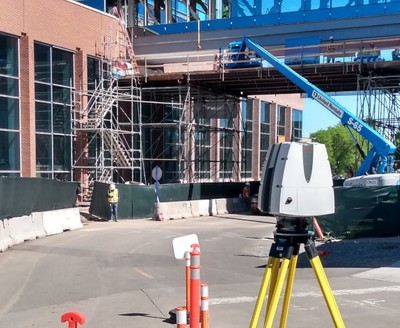
A 3D laser scanning service operates by projecting laser beams that record millions of data points as they bounce off surfaces. The collected data forms a “point cloud,” which represents the precise geometry and dimensions of the scanned environment. This point cloud can then be converted into detailed three-dimensional models, which architects, engineers, and contractors use to plan renovations, new construction, and complex installations. The high level of accuracy ensures that potential design conflicts or structural inconsistencies are detected early, reducing delays and preventing expensive rework. This technology allows teams to make informed decisions based on reliable, real-world data rather than estimates or approximations.
The applications of 3D laser scanning extend far beyond basic construction measurements. In industrial projects, it is used to map machinery, pipelines, and intricate systems for maintenance, retrofitting, or operational audits. Architects and interior designers benefit from the ability to create precise models for planning layouts and visualizing design concepts, which enhances client presentations and approvals. Historical preservation projects also leverage 3D scanning to document heritage structures in detail, providing a digital archive that supports restoration and conservation work. By capturing exact dimensions and intricate details, this service ensures that future interventions are accurate and efficient.
Collaboration is another area where a 3D laser scanning service proves invaluable. The digital models generated can be shared across project teams, enabling architects, engineers, contractors, and clients to analyze and review the same information. This shared understanding reduces miscommunication, accelerates decision-making, and ensures that all stakeholders are aligned on project goals. Integration with Building Information Modeling (BIM) systems further enhances the utility of scanning data, allowing teams to perform clash detection, simulate construction sequences, and streamline overall project management.
As technology evolves, 3D laser scanning has become more accessible, portable, and cost-effective. Modern scanners can quickly capture complex geometries and challenging spaces, making it feasible to integrate this service into everyday project workflows. Companies that adopt 3D laser scanning gain a competitive advantage by delivering projects more accurately, efficiently, and safely, ultimately enhancing client satisfaction and project outcomes.
In conclusion, the 3D laser scanning service is revolutionizing the way construction, engineering, and design projects are planned and executed. By providing precise, detailed, and shareable digital models, it improves accuracy, facilitates collaboration, and reduces costs. Embracing this technology has become essential for organizations seeking to deliver high-quality results in an increasingly demanding industry.
Apex 3D Scanning Solutions
2520 Shannon Dr, Murfreesboro, TN 37129
(615) 425-8735